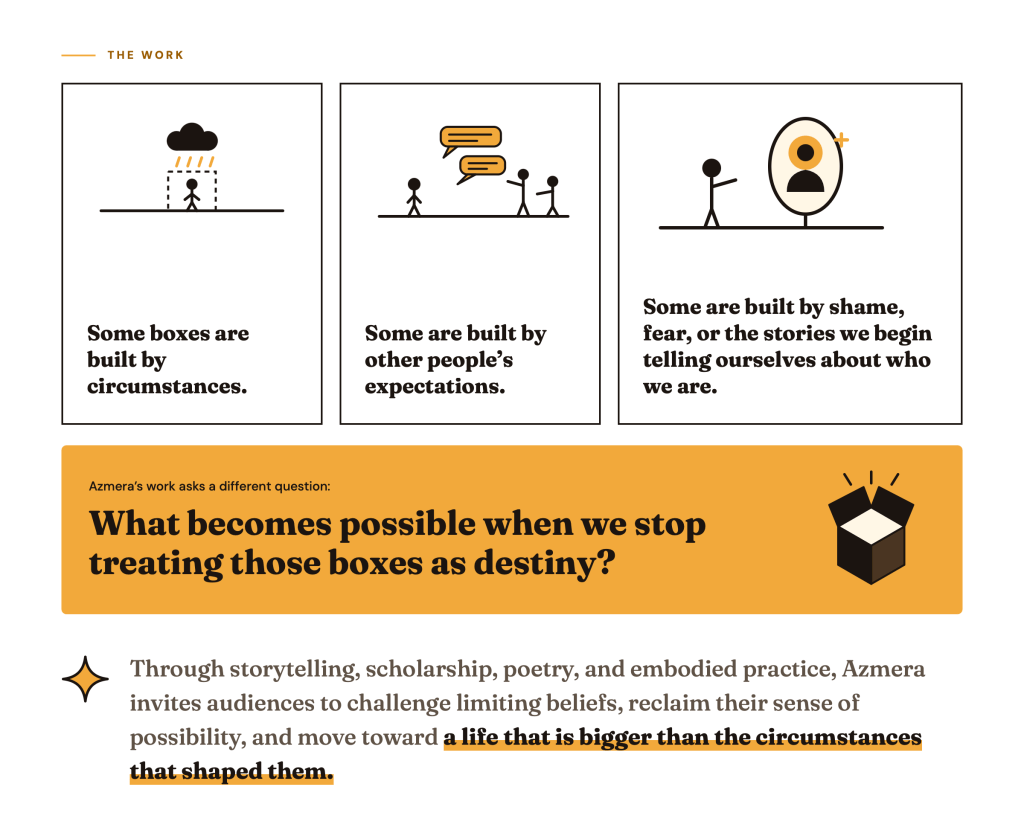
Azmera Hammouri-Davis is a speaker, author, poet, and scholar-practitioner who challenges audiences to break the boxes that limit how they see themselves—and expand what they believe is possible.
Drawing from her own journey through housing insecurity, mental health and wellness, academic achievement, creative practice, and community organizing, Azmera weaves together authentic storytelling, scholarship, poetry, and embodied practice to explore resilience, identity, belonging, healing, and human possibility.
A MESSAGE FOR ANYONE WHO HAS EVER BEEN TOLD “YOU CAN’T.”
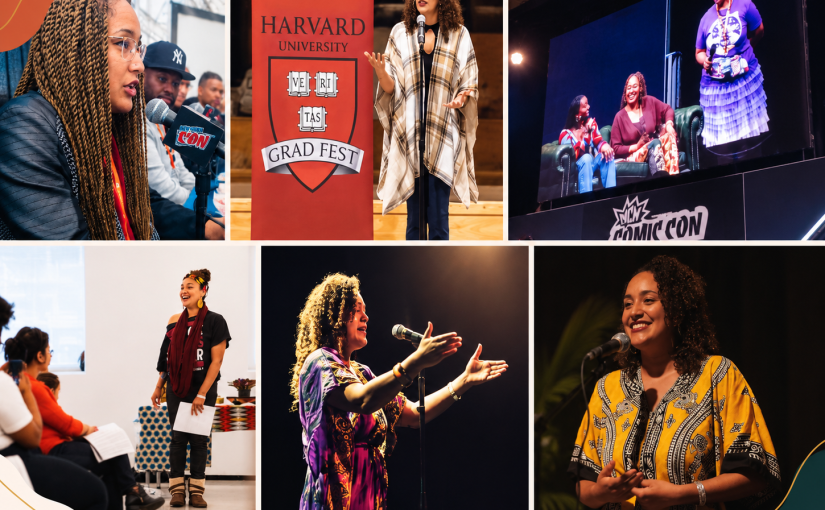
AS SEEN / HEARD / FEATURED AT
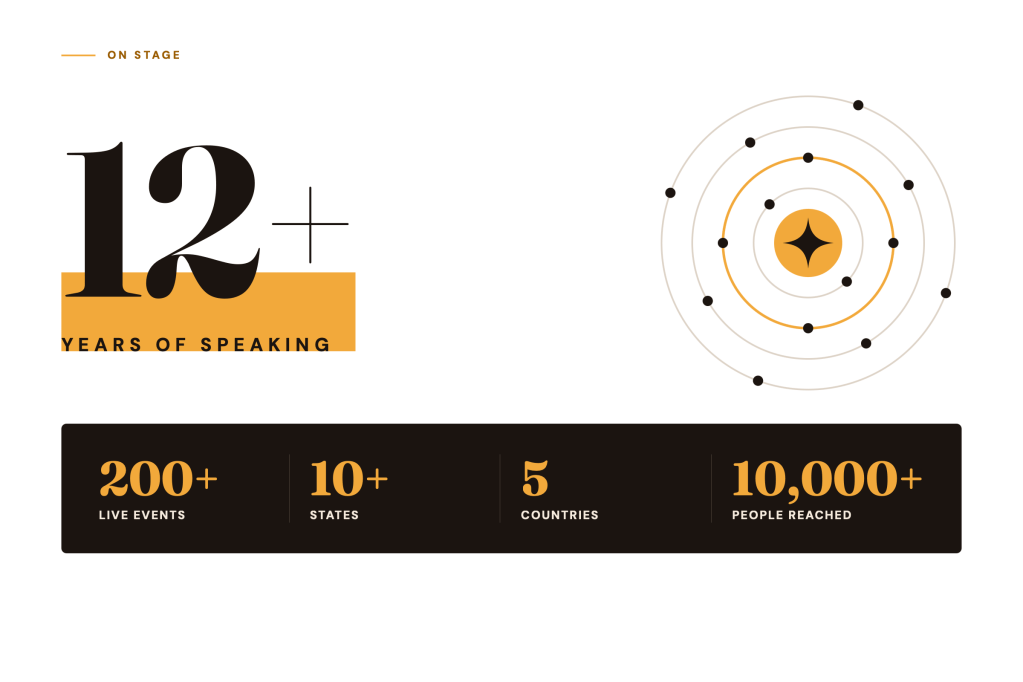
From universities and academic conferences to cultural festivals, community organizations, youth programs, and major conventions, Azmera has spent more than a decade creating experiences that invite audiences to think differently, feel deeply, and imagine what comes next.

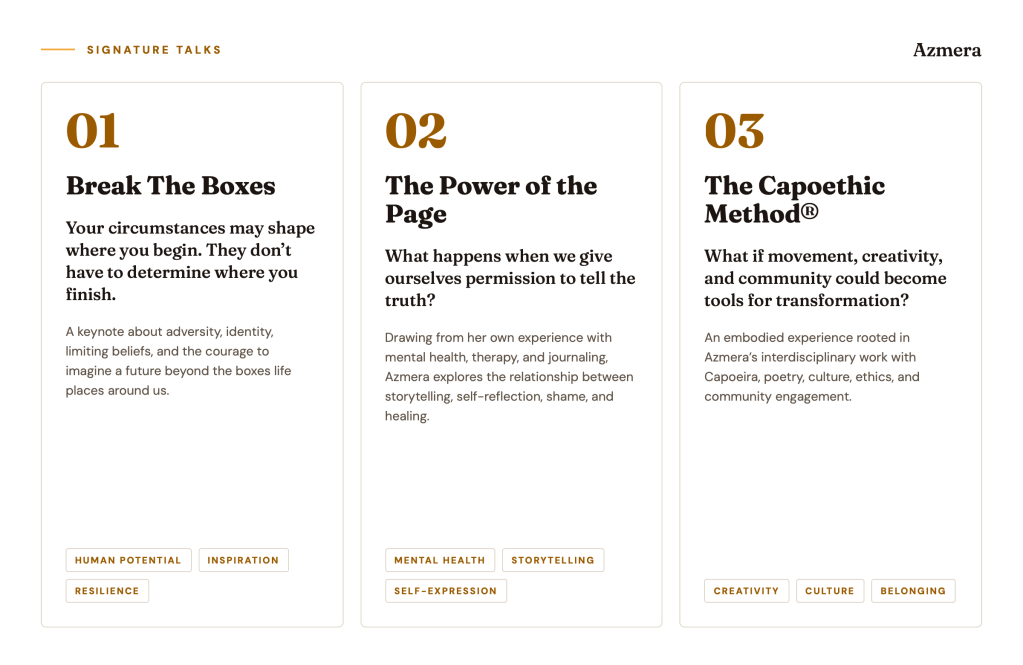
SIGNATURE TALKS THAT MOVE PEOPLE
Azmera’s talks combine compelling storytelling with practical insight, intellectual curiosity, and the creative power of poetry, performance, and embodied practice.
SEE AZMERA IN ACTION
Azmera doesn’t believe meaningful speaking has to fit inside a single format. Depending on the room, she may deliver a keynote, facilitate a workshop, perform poetry, lead an embodied experience, sing a song, join a conversation, or weave all of these together.
WATCH REEL (COMING SOON)
SHE KNOWS WHAT IT MEANS TO START WITHOUT A ROADMAP.
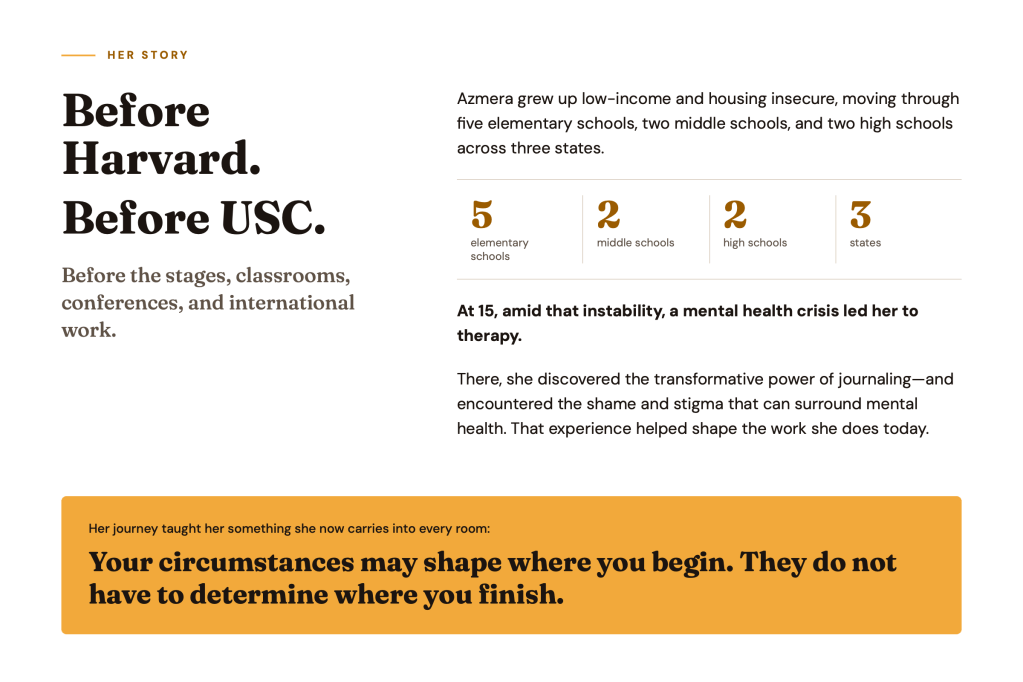
[READ AZMERA’S STORY →]
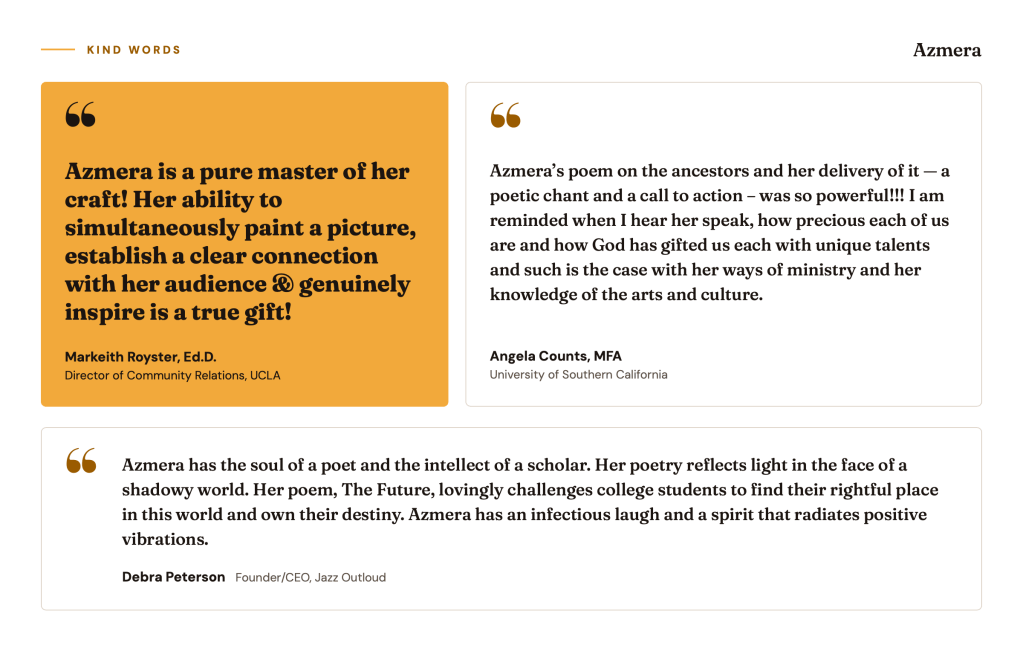
WHAT HAPPENS WHEN AZMERA TAKES THE STAGE
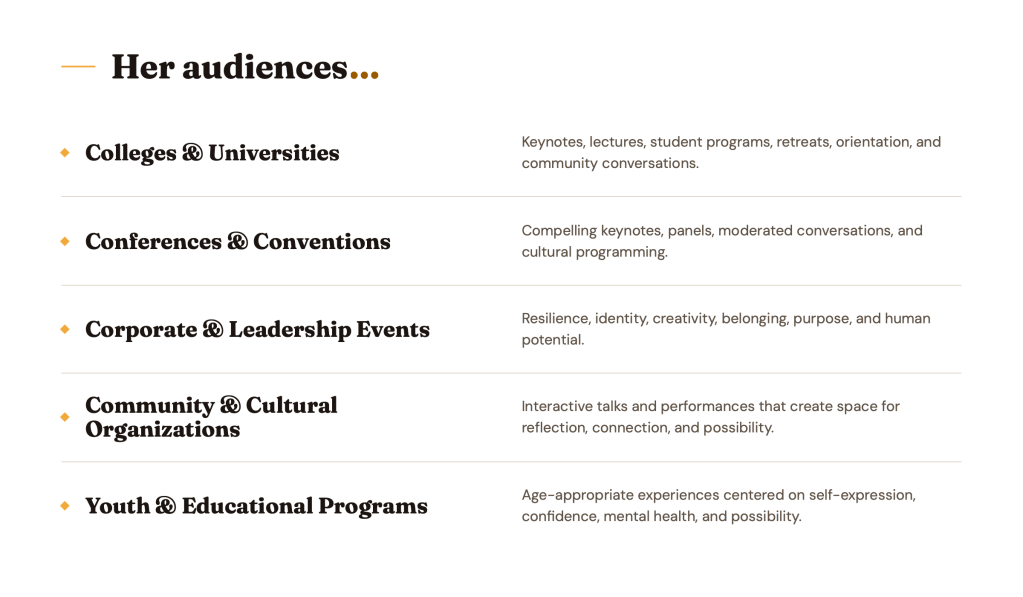
FOR ROOMS THAT WANT MORE THAN A SPEECH
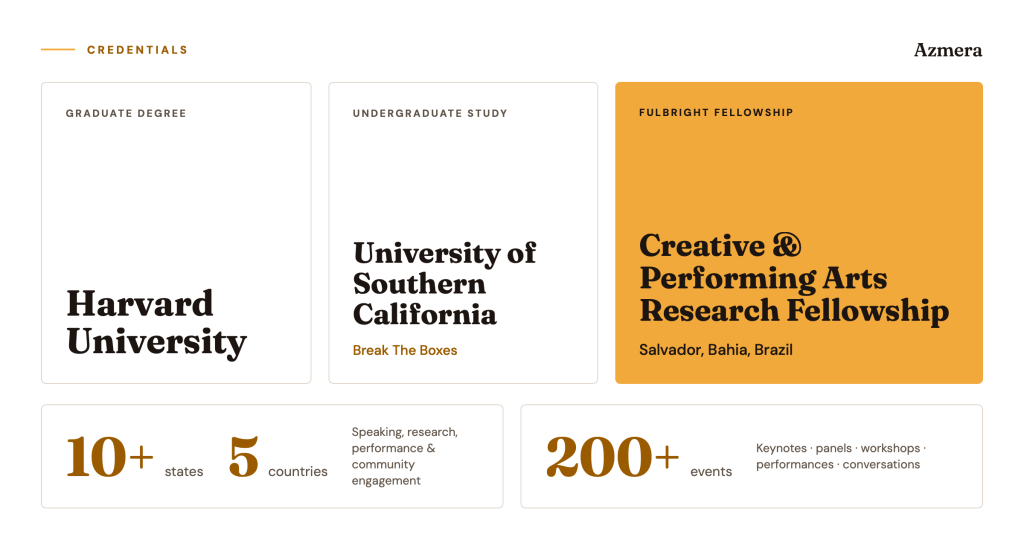
A LIFE OF BREAKING BOXES
READY TO BREAK THE BOXES?
Bring Azmera to your next keynote, conference, campus, workshop, retreat, or community event.
Let’s create an experience your audience will not simply hear—but carry with them.
[BOOK AZMERA →]

